comm-unity creative collective AG
Basel
comm-unity is a creative collective that supports companies from initial idea to market success. The company specialises in branding, storytelling and digital technology. With over 55 years of…
Which e-commerce agency is the best fit for you?
Between Chiasso and Airolo, hardly any online shop sells only to its own village. Ticino's domestic market is small, so most e-commerce projects in the canton aim beyond the Gotthard from the start: wineries from the Mendrisiotto and the Malcantone delivering their Merlot directly to customers in Zurich and Bern, producers of alpine cheese, salumi and olive oil adding a dedicated D2C shop to their farm-gate sales, manufacturers and retailers looking to serve the national market trilingually in Italian, German and French right away. An e-commerce agency in Ticino therefore has to do more than set up a pretty shop: shipping logic to German-speaking Switzerland, multilingual product data and the particularities of wine and food shipping belong in the concept from day one. And anyone delivering within the canton needs logistics that fit the geography: home delivery between the Mendrisiotto and the Sopraceneri, in-store pickup points and routes that reach the valleys too.
Then there is the border. With Chiasso, one of Switzerland's most important logistics hubs sits in the canton, the Mendrisiotto has handled fashion logistics for international brands for decades, and many Ticino retailers think about selling towards Italy from the outset. Cross-border trade brings its own keywords, from customs via VAT to return routes, and a good agency tells you early which of them affect your project and where you should bring in additional specialists. On the other side stands tourism: destinations, hotels and events between Ascona, Locarno and Lugano increasingly extend their brand into merchandising shops that generate revenue outside the season too, instead of only at the summer kiosk. Those who get in early sell the Ticino feeling all year round, from the festival shirt to the voucher for the grotto.
mmesh.ai is an independent Swiss platform that matches clients neutrally with suitable providers. On this page you will find a curated overview of e-commerce agencies from across Ticino, from the Mendrisiotto via Lugano to Bellinzona and Locarno, plus concrete guidance on pricing, services and selection. You compare profiles, services and genuine reviews and then make contact directly. Free of charge, commission-free, and your contact details are never sold to third parties.


Basel
comm-unity is a creative collective that supports companies from initial idea to market success. The company specialises in branding, storytelling and digital technology. With over 55 years of…

St. Gallen
Digitalisation, AI and content define what outperform stands for. The owner-managed agency from St. Gallen has been active since 2011, combining its own projects with client work. The offering starts…

Basel
Sukoa AG, located at Falknerstrasse 4 in Basel, is a digital agency focused on web-based enterprise solutions. Under the leadership of Thomas Martin, around ten specialists work across development…
This is a curated selection, not a complete list. For a shortlist tailored to your project, briefly describe what you are planning. mmesh matches you neutrally with the best-fitting E-commerce agencies in Ticino. Free, no commission.
Find the right e-commerce agency via briefing→Pure e-commerce houses are rare in Ticino. Most providers are web and digital agencies that run shops as a substantial part of their portfolio, plus specialised teams around the Mendrisiotto logistics and trading hub, where FoxTown and the fashion logistics business have anchored operational retail know-how for decades. For clients that means the selection is more manageable than in Zurich, but the lines are short and the rates lower. Many teams sit in the Lugano area between Manno, Bioggio and Paradiso, yet serve mandates across the whole canton, from Chiasso to Locarno.
The market is driven by two movements. First, direct-to-consumer sales: wineries, aziende agricole and food producers are building their own D2C channels, because selling to German-speaking Switzerland without intermediaries brings significantly better margins and customers seek the story behind the product. Second, professionalisation in retail: existing retailers are replacing outdated shops, connecting inventory management and building marketplace channels. Tourism adds a third field, creating shop constellations of its own with merchandising, vouchers and ticketing.
The natural strength of Ticino agencies is language: shops here are often built in Italian and German from the start, frequently with French on top. For clients from German-speaking Switzerland looking to open up the Italian-speaking market, that is an advantage no translation bureau can retrofit. And because German-speaking Switzerland is the most important sales market for most Ticino shops, clean German in the checkout is part of the craft here.
E-commerce in Ticino ranges from a winery's D2C shop to an ERP-integrated retailer setup with a cross-border connection. Six typical service building blocks, so you can tailor the right mandate. Most Ticino projects combine two or three of these blocks, rarely all six at once.
Range analysis, target market definition and the choice between Shopify, WooCommerce, Shopware or custom. In Ticino, the question of language versions and shipping destinations belongs in from the start. Usually as a workshop or project kick-off, CHF 2'000 to 8'000.
Direct sales for wineries, food and manufacturing businesses: age check, subscription and club models, gift options, specialist shipping, including a link to farm-gate sales so stock and shop stay in sync. The fastest-growing shop type in the canton. CHF 8'000 to 30'000.
Clean language versions in Italian, German and French, from product data structure via translation workflows to per-language SEO, also as an expansion of an existing monolingual shop. A core competence of many Ticino agencies. CHF 5'000 to 25'000 depending on the range.
Technical setup for selling across the border: currency, payment methods, shipping and returns logic, and mapping customs and VAT requirements in the checkout. Tax and customs advice comes from specialist bodies; the agency integrates. CHF 8'000 to 40'000.
Loading speed, checkout optimisation, A/B tests, email automation for cart abandoners and reactivation. Usually as an ongoing mandate, CHF 1'000 to 4'000 per month, cheaper in Ticino than in German-speaking Switzerland.
Connection to inventory management and till, payment providers with TWINT and QR invoice, interfaces to shipping providers and fulfilment, including marketplace channels such as Galaxus. For deliveries within the canton, route and pickup logic comes on top. CHF 5'000 to 50'000 depending on the system landscape.
Ticino price levels sit noticeably below German-speaking Switzerland: hourly rates range between CHF 110 and CHF 180 depending on specialisation, while comparable Zurich shop mandates quickly get more expensive. A template-based Shopify shop with a Swiss payment setup (TWINT, credit card, invoice with QR code) and a manageable range comes in at CHF 6'000 to 18'000. A custom-designed SME shop with two to three language versions ranges between CHF 15'000 and 40'000. Custom projects with ERP integration, complex shipping logic or a cross-border setup towards Italy start at CHF 40'000 and can reach six figures.
One line item that counts especially in Ticino: the language versions. Maintaining product copy cleanly in Italian, German and French does not cost three times as much, but depending on range size 20 to 40 per cent more, for translation, upkeep and separate analytics. Wine and food add packaging and specialist shipping, such as shatterproof wine cartons or chilled consignments. Anyone delivering within the canton themselves additionally budgets routes, pickup points and possibly refrigerated vehicles; that belongs in the operating calculation, not the shop budget.
Also plan for ongoing costs for platform, payment fees, hosting and maintenance, typically CHF 150 to 1'200 per month. A shop is an operation, not a finished project.
Three tiers as orientation, each plus ongoing operating costs. Ticino hourly rates typically sit at CHF 110 to 180. Within each tier, the number of language versions and the depth of logistics decide the price above all.
Template-based Shopify shop with a Swiss payment setup (TWINT, QR invoice), one to two languages, a manageable range. Typical for wineries and producers taking the first step.
Custom design, language versions IT/DE/FR, extended shipping and product logic, subscription features, basic SEO per language. For retailers and brands with a national target market.
Shopware or a custom build, ERP and logistics integration, marketplace channels, selling towards Italy with the corresponding checkout setup. For established retailers and B2B constellations.
First question: where do you sell to? A winery primarily supplying German-speaking Switzerland needs a different setup from a retailer serving the canton, or a provider with ambitions towards Italy. Almost everything hinges on this: language versions, shipping logic, payment methods and whether cross-border keywords such as customs and VAT need to be on the table early. If you want several markets at once, plan in stages: the strongest market first, then the expansion; it keeps budget and team together.
Second question: industry fit. Wine and food shops demand things a standard shop does not bring: an age check for alcohol sales, shatterproof or chilled logistics, subscription and club models for regulars. Tourism merchandising, in turn, lives on lean ranges and clean fulfilment. Have them show you reference shops from your constellation and walk their checkout through to the payment selection yourself.
Third question: who runs the shop after launch? Clarify upfront whether the agency continues to look after range, promotions and performance or hands over, on what terms and with what response times. Also ask who supplies and maintains product data and images: missing content is the most common cause of delay in shop projects, not the technology. And secure your ownership rights: shop account, domain, payment contracts and analytics belong to you. Tip: compare services and reviews on mmesh.ai before making contact.
Go through these seven points concretely before signing a contract. For producers, points 3, 4 and 6 matter most. Take the list into the first meeting and have every point answered concretely.
Six typical starting positions from the canton with realistic budget ranges. The budgets follow Ticino price levels and sit below comparable mandates in German-speaking Switzerland.
Merlot and specialities directly to customers across Switzerland: a shop with age check, wine subscription, gift options, a club area for regulars and shatterproof shipping. CHF 8'000 to 25'000 build.
Alpine cheese, salumi, olive oil and fine foods as a D2C range, partly shipped chilled or collected at the farm, with seasonal peaks in the gift business. CHF 8'000 to 30'000 plus a logistics concept.
Retailers and brands around the fashion and logistics cluster: a shop with inventory management integration, marketplace channels and returns processes. CHF 30'000 to 100'000.
Destinations, hotels and events between Ascona, Locarno and Lugano sell merchandising and vouchers online, outside the season too. CHF 6'000 to 20'000.
Small series and bespoke products with variant logic, product photography decisive, selling trilingually across Switzerland. CHF 10'000 to 30'000.
The shop runs, revenue stagnates: a performance mandate covering loading speed, checkout, per-language SEO and email automation instead of a rebuild. CHF 1'000 to 4'000 per month.
Over 1550 providers from across Switzerland, researched and curated, including agencies with e-commerce as a vetted part of their portfolio.
Profiles, services and genuine reviews side by side, so you find the right e-commerce agency for your range and target market faster.
Reviews come only from verified clients, including for mandates that were not arranged through mmesh.ai.
After the briefing you contact the providers directly. mmesh.ai takes no commission and never resells data.

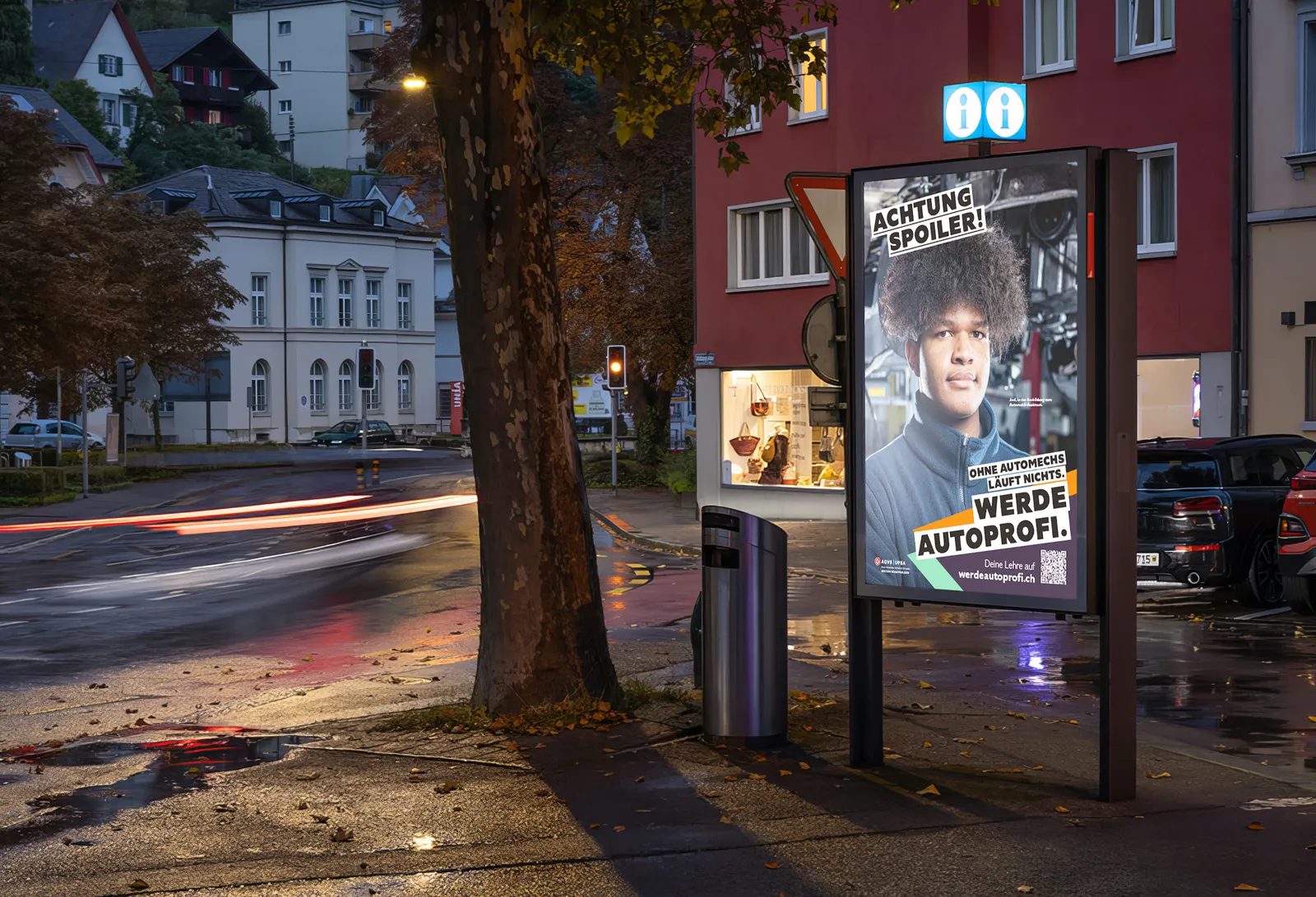
Declining apprentice numbers, tight budget, high expectations: how AGVS Schaffhausen achieved full apprenticeship classes with a focused talent campaign. A case study by weisspunkt.
4 min read
Budget levels, disciplines and sequence: the practical guide to marketing for Swiss SMEs. With CHF benchmarks, the five most common mistakes and a checklist for doing it yourself or outsourcing it.
6 min read
A curated overview of 21 advertising agencies in Switzerland, from owner-led boutiques to network agencies, with short profiles, CHF benchmarks and selection tips.
6 min readDescribe your project in our briefing. mmesh matches you with the best-fitting providers for free. No commission, no sharing of contact details without your consent.
Find matching service providers