

A
ADVagency
Lugano
–
Rating
8
Services
Based in Via Pietro Peri in Lugano, this company works mainly with businesses in Canton Ticino, while also handling projects across Switzerland and Italy. Its positioning is clear: performance…
Which e-commerce agency is the best fit for you?
An online shop built in Lugano rarely sells only into Ticino. Around 350'000 people live in the canton; the real sales market lies beyond the Gotthard. Anyone who wants to sell online successfully from here builds a shop for the whole of Switzerland from day one, with Italian and German language versions, Swiss payment methods and shipping logic that serves Zurich and Bern just as reliably as Massagno. The region brings a surprising amount to the table: the Mendrisiotto around the FoxTown cluster is one of Switzerland's densest fashion retail and logistics locations, with decades of experience in range management, warehousing and fulfilment that even smaller shop projects benefit from, especially in the fashion and luxury segment.
Two points set a Ticino shop project apart from one in German-speaking Switzerland. First, payment methods: the proximity to Italy tempts you to align the checkout with Italian habits, where credit card and PayPal dominate. Swiss customers tick differently: they expect TWINT and the invoice with QR code, and they measurably abandon more often when both are missing. Second, language: an Italian-only shop gives away three quarters of the Swiss market. The German version therefore belongs in the concept from the start, and depending on the range the French one too, with product copy proofread by native speakers from German-speaking Switzerland rather than merely machine-translated. Add the platform choice between Shopify for a fast start and WooCommerce for anyone already on WordPress, and the question of how the physical store's till and inventory management get connected.
mmesh.ai is an independent Swiss platform that matches clients neutrally with the right providers. On this page you will find a curated overview of e-commerce agencies from Lugano and Ticino and compare profiles, services and genuine reviews, plus concrete guidance on pricing, platform choice and typical shop constellations. The listed providers know the realities of the location: multilingual ranges, Swiss payment setup, shipping from Ticino to the whole of Switzerland and the retail experience of the Mendrisiotto. That way your business finds the right e-commerce agency in Lugano for its range and budget faster. Free of charge, commission-free, and your contact details are never sold to third parties.
Lugano
Based in Via Pietro Peri in Lugano, this company works mainly with businesses in Canton Ticino, while also handling projects across Switzerland and Italy. Its positioning is clear: performance…
Lugano
Based in Lugano, this team has supported the growth of over 350 companies in Ticino and across Switzerland since 2014, with a method structured in five stages: initial audit, roadmap, system build…
Bioggio
Based in Bioggio, in the Lugano area, this creative team supports companies in building market visibility with a practical, hands-on approach. The offering ranges from design – including branding…
This is a curated selection, not a complete list. For a shortlist tailored to your project, briefly describe what you're planning. mmesh matches you neutrally with the best-fitting e-commerce agencies in Lugano. Free, no commission.
Find the right e-commerce agency via briefing→Italian-speaking Switzerland has a retail DNA of its own: in the Mendrisiotto around the FoxTown cluster, fashion retail, brand distribution and logistics have condensed over decades, and between Mendrisio, Novazzano and Chiasso sit warehousing, customs and fulfilment providers built for the flow of goods between Italy and Switzerland. For shop projects that means the know-how for ranges, sizing logic and returns exists locally, and shipping from Ticino to the whole of Switzerland is well solved, with parcel transit times barely different from a location in German-speaking Switzerland.
The provider landscape splits three ways: digital agencies with an e-commerce focus in the commercial belt of Manno and Bioggio, smaller studios in and around Lugano that build shops as part of a web mandate, and specialised solo experts for Shopify or WooCommerce. Genuine e-commerce depth with performance optimisation, marketplace integration and data competence is rarer than in Zurich, but the lines are short and hourly rates of CHF 110 to 180 are moderate. USI and SUPSI supply young talent in computer science and communication, and part of it stays in the local digital scene.
Price pressure from Italy is noticeable: agencies from Lombardy quote shops significantly cheaper, but know neither TWINT nor QR invoice nor the expectations of customers in German-speaking Switzerland from their own practice. Ticino providers therefore deliberately position themselves on Swiss market expertise, and that is exactly what you should test in the selection process.
A shop project is a chain of strategy, platform build, payment, content, logistics integration and operations. In Ticino, multilingualism comes on top as a cross-cutting theme. Six typical service areas, so you can compare quotes cleanly and spot gaps early.
Target markets, positioning, range and price structure, and the channel question between your own shop and marketplaces such as Galaxus. For Ticino retailers this includes deciding whether to serve only Switzerland or Italy as well, because customs, VAT and returns processes hang on that.
Setup, design and implementation on the chosen platform, including product data import and a multilingual structure. Shopify dominates for fast starts with predictable costs, WooCommerce for WordPress proximity and special requirements. Good agencies justify the choice from your range, not from their specialisation.
Integration of TWINT, credit card, QR invoice and, depending on your audience, wallets, via providers such as Datatrans, Payrexx or Wallee. Plus checkout optimisation with Swiss shipping cost logic and VAT handling. The area where Swiss practice differs most clearly from Italian.
Product copy, categories and transactional emails in Italian and German, and French depending on the market, proofread by native speakers. Fashion ranges add product photography with cut-out and detail shots. From around 100 items, a dedicated budget line of CHF 3'000 to 15'000.
Interfaces to the till, inventory management or ERP for synchronised stock, plus shipping and returns processes from Ticino to the whole of Switzerland. The Mendrisiotto's fulfilment experience is a genuine location advantage here, especially for fashion ranges with high return rates.
Maintenance, loading speed, conversion optimisation, SEO for product and category pages and email automation after launch. Billed as a retainer, in Ticino typically CHF 300 to 1'500 per month for maintenance and CHF 1'500 to 4'000 for active growth.
Ticino hourly rates typically sit between CHF 110 and 180, below Zurich levels, which noticeably eases shop budgets. A template-based Shopify shop with a Swiss payment setup (TWINT, credit card, QR invoice) and two language versions starts in Lugano at around CHF 7'000 and runs to about CHF 20'000. WooCommerce with custom design and till integration comes in at CHF 15'000 to 35'000. Fashion and multichannel projects with ERP or inventory management integration, three languages and fulfilment logic range between CHF 35'000 and 90'000. Add ongoing costs for platform, payment fees, hosting and maintenance, typically CHF 150 to 1'000 per month.
Factor in multilingualism from the outset: each additional language version costs 15 to 30 per cent of the base project depending on range size, because product copy, categories, transactional emails and terms and conditions all need translating and maintaining. With fashion ranges, product photography adds to the bill: from around 100 items you should budget CHF 3'000 to 15'000.
One location factor: quotes from Italy often come in 30 to 50 per cent lower, but they bring hosting outside Switzerland, different data protection standards and support across the border. For a shop meant to serve Swiss customers, a provider with hands-on Swiss payment and shipping practice is usually worth the premium.
Three rough tiers as orientation. Within each tier, the price varies mainly with range size, the number of language versions and the depth of integration. Ticino hourly rates typically sit at CHF 110 to 180.
Template-based, TWINT and QR invoice, Italian and German, up to around 150 items. Boutiques and local retailers taking the step into German-speaking Switzerland.
Custom design on WooCommerce or Shopify, till integration for synchronised stock, basic SEO for categories and products, a defined translation workflow.
Trilingual range, ERP or inventory management integration, fulfilment and returns logic, marketplace integration and ongoing performance optimisation. Brand retail around FoxTown and growing D2C brands.
First question: does the agency master the Swiss market, not just the Ticino one? Have them show you reference shops and walk their checkout through to the payment selection: TWINT and QR invoice must be a given, the shipping cost logic must cover the whole of Switzerland, and the German product copy must read naturally for customers in German-speaking Switzerland. A provider that has mainly built for the Italian market almost always underestimates these points.
Second question: how honest is the platform advice? Shopify and WooCommerce cover most Ticino SME cases, but the right choice depends on range, team and existing systems, such as the till in the store. Anyone selling you a platform immediately, without looking at these factors, is not advising but selling their specialisation. Ask specifically how stock is kept in sync between store and shop.
Third question: what happens after launch? A shop is an operation, not a project. Clarify upfront whether the agency continues with maintenance, conversion optimisation and marketing or hands over, on what terms, and make sure the shop account, domain, payment contracts and analytics belong to you. Tip: compare services and reviews on mmesh.ai before requesting quotes.
Go through these seven points concretely before signing a contract. For Ticino shop projects, points 1, 2 and 5 matter most.
Which shop approach works best for you depends heavily on your range and starting position. Six typical constellations from the greater Lugano area with realistic budget ranges.
Retailers and brand distributors around FoxTown selling online to the whole of Switzerland. Multilingual range, size and variant logic, returns process, often ERP integration. Budget: CHF 35'000-90'000.
Shops in and around Lugano extending their range online. Shopify with till integration, TWINT, in-store pickup and shipping to German-speaking Switzerland. Budget: CHF 7'000-20'000.
Wineries and producers selling Merlot, salumi and specialities directly to customers in German-speaking Switzerland. Bilingual shop, shipping logic for delicate goods, subscription options. Budget: CHF 10'000-30'000.
Small series and bespoke products with variant logic, where product photography and storytelling decide the sale. WooCommerce or Shopify. Budget: CHF 10'000-25'000.
Wholesalers and importers at the border location with customer-specific pricing, order logins and ERP integration, often as a closed B2B shop alongside the B2C channel. Budget: CHF 30'000-80'000.
The shop runs, revenue stagnates. A performance mandate covering loading speed, checkout optimisation, SEO and email automation instead of a rebuild. Budget: CHF 1'500-4'000 per month.
Over 1900 marketing and digital providers from across Switzerland, researched and curated. From the Ticino Shopify specialist to the digital agency with ERP and fulfilment expertise.
Profiles, services and genuine reviews of the e-commerce agencies side by side, so you see faster who truly masters Swiss payment, multilingualism and logistics integration.
Hosting in Switzerland, FADP-compliant data processing. The same standards your customers expect from your shop.
After the briefing you contact the providers directly. mmesh.ai takes no commission and never resells data.

No in-house marketing team? Three models compared: freelancer for a single discipline, agency for coordinated channels, marketing flat rate for a fixed monthly amount. With CHF benchmarks, five decision questions and a checklist for flat-rate contracts.
6 min read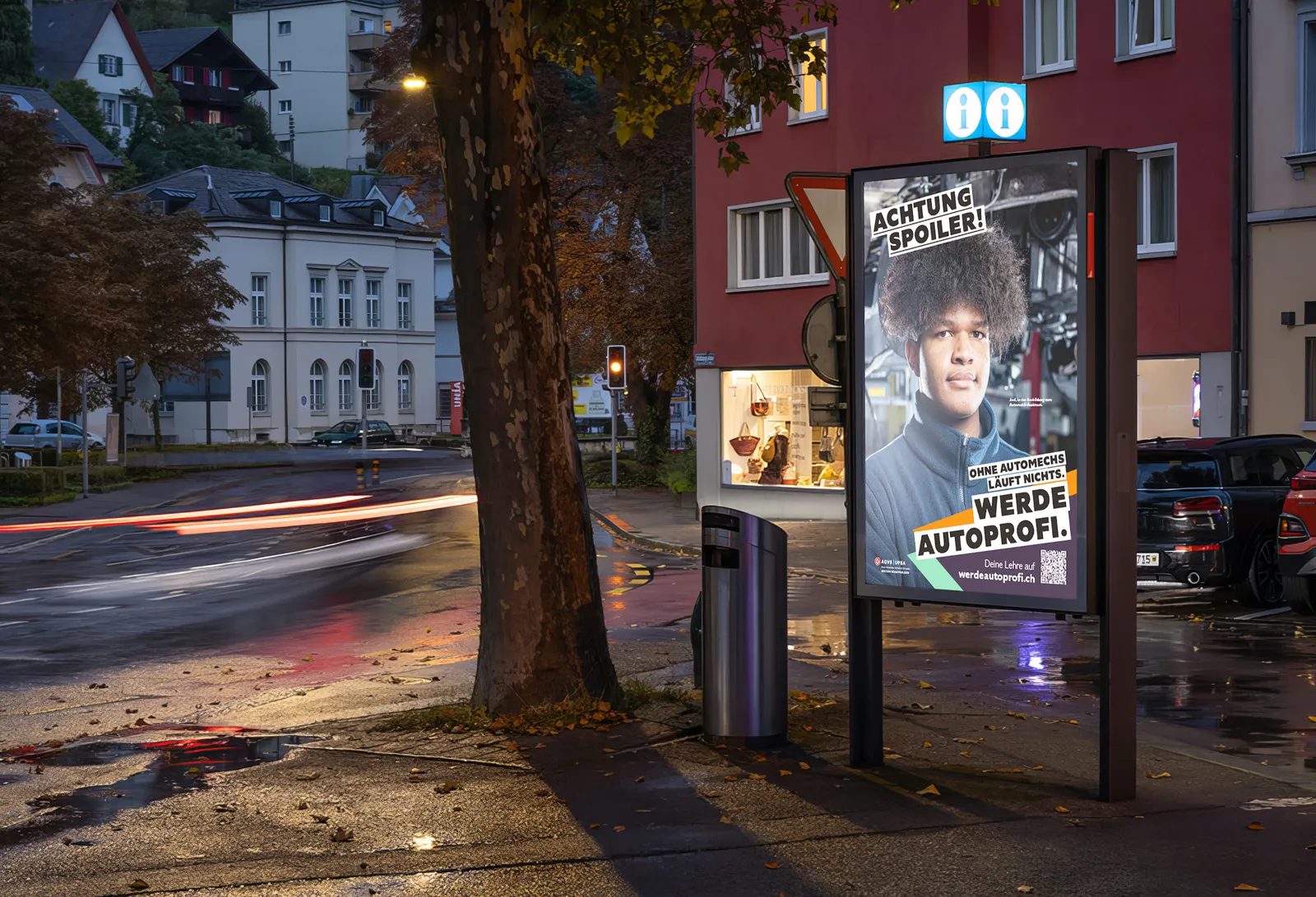
Declining apprentice numbers, tight budget, high expectations: how AGVS Schaffhausen achieved full apprenticeship classes with a focused talent campaign. A case study by weisspunkt.
4 min read
Budget levels, disciplines and sequence: the practical guide to marketing for Swiss SMEs. With CHF benchmarks, the five most common mistakes and a checklist for doing it yourself or outsourcing it.
6 min readDescribe your project in our briefing. mmesh matches you with the best-fitting providers for free. No commission, no sharing of contact details without your consent.
Find matching service providers