

A
Apptitude
Lausanne
–
Rating
6
Services
Firmenich, Alpiq, CHUV and even the Swiss Confederation are among the organisations that have entrusted their digital projects to Apptitude. The agency, based at the EPFL Innovation Park in Lausanne…
Which app development agency in Lausanne fits your product, your budget and your timeline?
Commissioning app development in Lausanne means entering the most product-driven market in French-speaking Switzerland. Around EPFL, UNIL and the Innovation Park in Ecublens, spin-offs and scale-ups emerge constantly that treat their mobile application not as a finished project but as a product with a roadmap: medtech applications where approval and documentation come up early, fintech prototypes with onboarding and identity verification, SaaS teams that need a companion application to their web product. English is often the first language here, short release cycles are the norm, and working with an app development agency tends to run through an embedded team in sprints rather than a fixed price with acceptance.
Alongside sits the classic Vaud economy, with different requirements. Régies and property managers, clinics and practices, the federations and sports organisations of the Olympic Capital, hotels, retail and restaurants along the Arc lémanique need service applications with a clear end state: appointment booking, customer account, member area, damage reporting, ticketing. What counts here is a predictable budget, low running costs and an agency that is still reachable in three years. And across every segment: fr/en bilingualism is not an option in Lausanne but a basic requirement. The city has a high share of international residents, many business relationships run in English, and an application that exists in only one language loses expats, international employees and partners on first launch. Both worlds have their own agencies, ways of working and pricing logics, and anyone who confuses them either pays for a start-up setup for a five-screen service application or squeezes a regulated product into a template kit.
mmesh.ai matches you free of charge with suitable app developers from the Lausanne catchment area, from Renens and Ecublens to Morges, Vevey and Nyon. The listed providers cover the full range, from the solo mobile developer for a local service application through bilingual boutiques with well-rehearsed fr/en workflows to the product-minded studio with experience in regulated industries. It is a curated selection, not complete market coverage, but you compare profiles, services and reviews directly and make contact yourself, with no commission and no selling of contacts. That way you find the app development agency in Lausanne that fits your product, your stack and your budget.
Lausanne
Firmenich, Alpiq, CHUV and even the Swiss Confederation are among the organisations that have entrusted their digital projects to Apptitude. The agency, based at the EPFL Innovation Park in Lausanne…
Lausanne
The development of digital health and MedTech applications sets this Lausanne-based studio, founded in 2021, apart. Its senior teams, fully in-house with no subcontracting, design iOS and Android…
Lausanne
Companies held back by organisational silos, underused data and manual processes find in 39 Advisory a partner that supports them from strategy through to deployment. The Carouge-based firm…
This is a curated selection, not a complete list. For a shortlist tailored to your project, briefly describe what you're planning. mmesh matches you neutrally with the best-fitting app developers in Lausanne. Free, no commission.
Find the right app development agency via briefing→Lausanne combines three poles: the tech ecosystem around EPFL, UNIL and the Innovation Park in Ecublens, the federation and sports world of the Olympic Capital, and the classic services and property economy of the Arc lémanique. Added to this is the life sciences cluster around CHUV and Biopôle in Epalinges, which demands medtech applications with regulatory requirements. The proximity to Geneva makes the market permeable: agencies often serve both cities, and hourly rates sit correspondingly close together. Unlike Geneva, however, the Lausanne market is less shaped by international organisations and more by the start-up ecosystem.
Structurally, three provider types shape the market: first, product-minded studios close to EPFL, strong in cross-platform, backend architecture, automated testing and en-first projects, often with medtech or fintech experience; second, bilingual boutiques for SMEs, régies and federations with solid cross-platform competence and well-rehearsed fr/en workflows; third, solo developers and small teams for local service applications from Renens to Pully, often with a direct line and lean processes.
For most Lausanne SMEs, category 2 or 3 is the right choice; for product teams, category 1. The product-minded studios calculate on a sprint basis and fit poorly with a classic fixed-price project, while the SME boutiques conversely rarely bring the architectural depth for a regulated product. Hourly rates typically sit at CHF 130 to 220. Seasonality plays a small role, but event and tourism engagements along the Riviera Vevey-Montreux bring their own cycles into the market, with launch dates set before the season.
An application comes together in a chain of UX, native or cross-platform development, backend, store submission and maintenance. Six disciplines that in Lausanne almost always have to be conceived bilingually and for two very different client types.
Personas, user flows, clickable prototypes in Figma, user testing before the first line of code. For fr/en applications including language logic, text lengths in the layout and onboarding per language.
Swift and SwiftUI. For premium UX, sensors, Bluetooth connectivity and medtech requirements where each platform is documented and tested separately.
Kotlin and Jetpack Compose. For the reach of service and federation applications whose audience does not only use iPhones.
The standard for MVPs, SME tools and companion applications to SaaS products. One codebase, two stores, markedly lower running costs.
Booking, payment, CRM, member management, connection to property management software. Swiss hosting and FADP-compliant data storage planned from the start, mandatory with health or financial data.
Listings in French and English, the review process with Apple and Google, OS updates, security patches and store requirements within the retainer. Maintenance flat fees of CHF 1'500 to 15'000 per month depending on tier.
Lausanne hourly rates for app development typically sit between CHF 130 and 220, close to Geneva and Zurich levels and above smaller Romandie cities. A cross-platform MVP with one backend and one clear core function starts at CHF 25'000 and reaches CHF 70'000. Mid-sized applications on both platforms, with their own backend, customer account and connections to existing systems, range between CHF 70'000 and CHF 170'000. The ranges are wide because the share of concept, design and integrations varies heavily from project to project.
fr/en bilingualism adds 25 to 40 percent in effort, because copy, store listings, push notifications and support are maintained twice and every change is tested twice. Product applications for scale-ups and regulated industries such as medtech or fintech calculate differently: design system, automated tests, audit documentation and ongoing iteration sit between CHF 150'000 and 500'000 and more, plus a retainer of CHF 6'000 to 15'000 per month for further development. You should see maintenance and store upkeep listed as a separate item in every quote, or it will resurface after launch as a change order.
What you should avoid as a Lausanne SME: a start-up setup with an embedded team and sprint billing for a five-screen service application. For a régie or a practice, a fixed-price cross-platform project is cheaper to run and easier to hand over if you switch agencies. The reverse also holds: a product with approval questions or a growing backend does not belong in a template kit, because every later iteration there runs up against the system's limits.
Three tiers. Hourly rates in Lausanne typically sit at CHF 130 to 220, bilingual fr/en plus 25 to 40 percent.
Cross-platform, one backend, one core function such as appointment booking or a customer account. Practices in Pully, restaurants in the Cité, trades in Renens and Crissier. Mostly French, English optional.
Both platforms, custom backend, member or event area, connection to CRM or management software, genuine bilingualism. Typical for régies, clinics and sports organisations.
Native or cross-platform with design system, automated tests, documentation for medtech or fintech, en-first with a French version. Ongoing iteration in sprints instead of a fixed end state.
First clarify which of the two Lausanne worlds your project plays in: product with a roadmap or service application with a clear end state. Everything else follows from that. A studio working for EPFL spin-offs thinks in sprints, metrics and release cycles and wants to provide an embedded team. An SME boutique delivers reliable standards at predictable costs and hands over a finished product with a maintenance contract at the end. Both are right, but rarely united in the same agency, and a mismatch costs you time, money and nerves.
Ask to see applications in the same setup: installable from the stores, same fr/en language combination, comparable integrations, similar complexity. A beautiful portfolio says little if not a single project matches your constellation. Ask specifically who is responsible for the French and English copy: in-house native speakers, a translation partner or you yourself? With health or financial data, a second question follows: what experience does the team have with FADP-compliant processing, Swiss hosting and the documentation an audit or approval requires?
Also important: does communication run directly with the people who build, or through account managers? For SME engagements, the direct line counts for more than any tool list. And make sure you remain owner of all access: Apple Developer and Google Play Console accounts, source code repositories, backend, analytics and push services are registered to your company. That protects you if you later switch agencies, is a matter of course with serious providers, and with others is a quiet lock-in instrument.
These points separate the right agency from the expensive one in Lausanne.
Which approach fits you depends on industry and business model. Six Lausanne constellations with realistic budget ranges.
Spin-offs from the Innovation Park, SaaS teams with a companion application, deep-tech companies with hardware connectivity. Cross-platform or native, design system, en-first with a French version, iteration in sprints after launch. Budget: CHF 150'000-500'000+ plus retainer.
Companies around CHUV and Biopôle in Epalinges. Patient, therapy and clinical study applications with documentation for approval, FADP-compliant data storage, often sensor or device connectivity. Budget: CHF 120'000-400'000.
Federations and organisations of the Olympic Capital, festivals and races by the lake. Member, event and ticketing applications with push notifications, multilingual fr/en, often plus de. Budget: CHF 60'000-180'000.
Property managers and developers on the Arc lémanique. Tenant portals with damage reporting, documents and appointments, connection to management software, fr/en for international tenants. Budget: CHF 50'000-130'000.
City hotels in Ouchy, restaurants in the Cité, businesses along the Riviera Vevey-Montreux. Booking, loyalty, guest information and ordering at the table in fr/en. Budget: CHF 35'000-100'000.
Practices in Pully, gyms in Renens, trades in Crissier, hairdressers in Prilly. Cross-platform MVP with appointment booking or a customer account, French first. Budget: CHF 25'000-65'000.
Over 1850 marketing providers from all over Switzerland, from Lausanne to Zurich, from solo developer to product studio.
Providers can be reviewed by verified clients, including for engagements that did not run through mmesh.ai.
Hosting in Switzerland, FADP-compliant data processing, no sharing of your data without your consent.
You contact the developers directly after your briefing. mmesh.ai takes no commission.
Three steps, free of charge for clients.
Describe your app project in a structured way with AI support: platforms, languages, integrations, budget range, timing.
The algorithm identifies the best-fitting developers across the whole network, by discipline, region and industry experience.
You review the match list, compare profiles and reviews, and approve who may contact you.
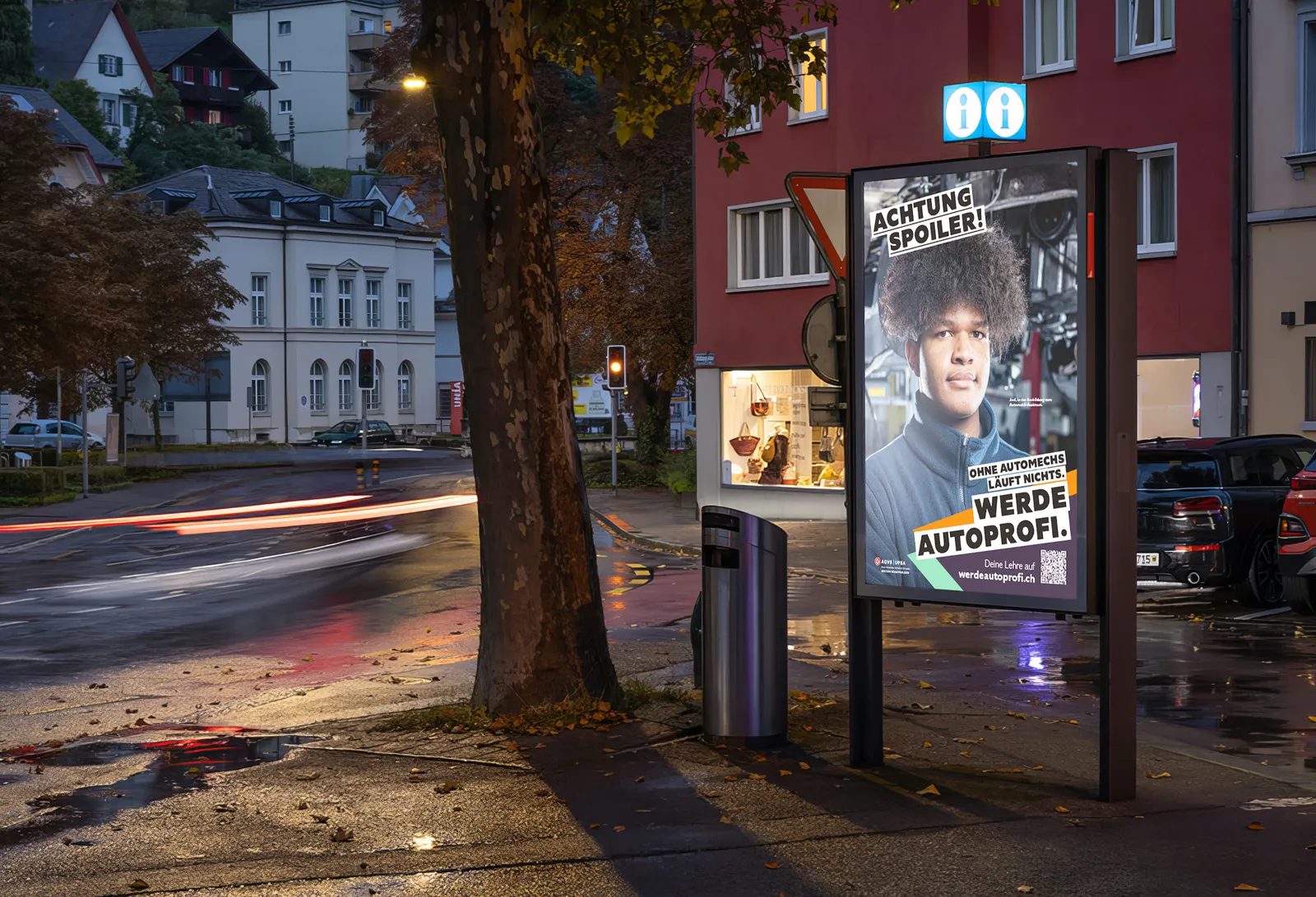
Declining apprentice numbers, tight budget, high expectations: how AGVS Schaffhausen achieved full apprenticeship classes with a focused talent campaign. A case study by weisspunkt.
4 min read
Budget levels, disciplines and sequence: the practical guide to marketing for Swiss SMEs. With CHF benchmarks, the five most common mistakes and a checklist for doing it yourself or outsourcing it.
6 min read
A curated overview of 21 advertising agencies in Switzerland, from owner-led boutiques to network agencies, with short profiles, CHF benchmarks and selection tips.
6 min readDescribe your project in our briefing. mmesh matches you with the best-fitting providers for free. No commission, no sharing of contact details without your consent.
Find matching service providers